
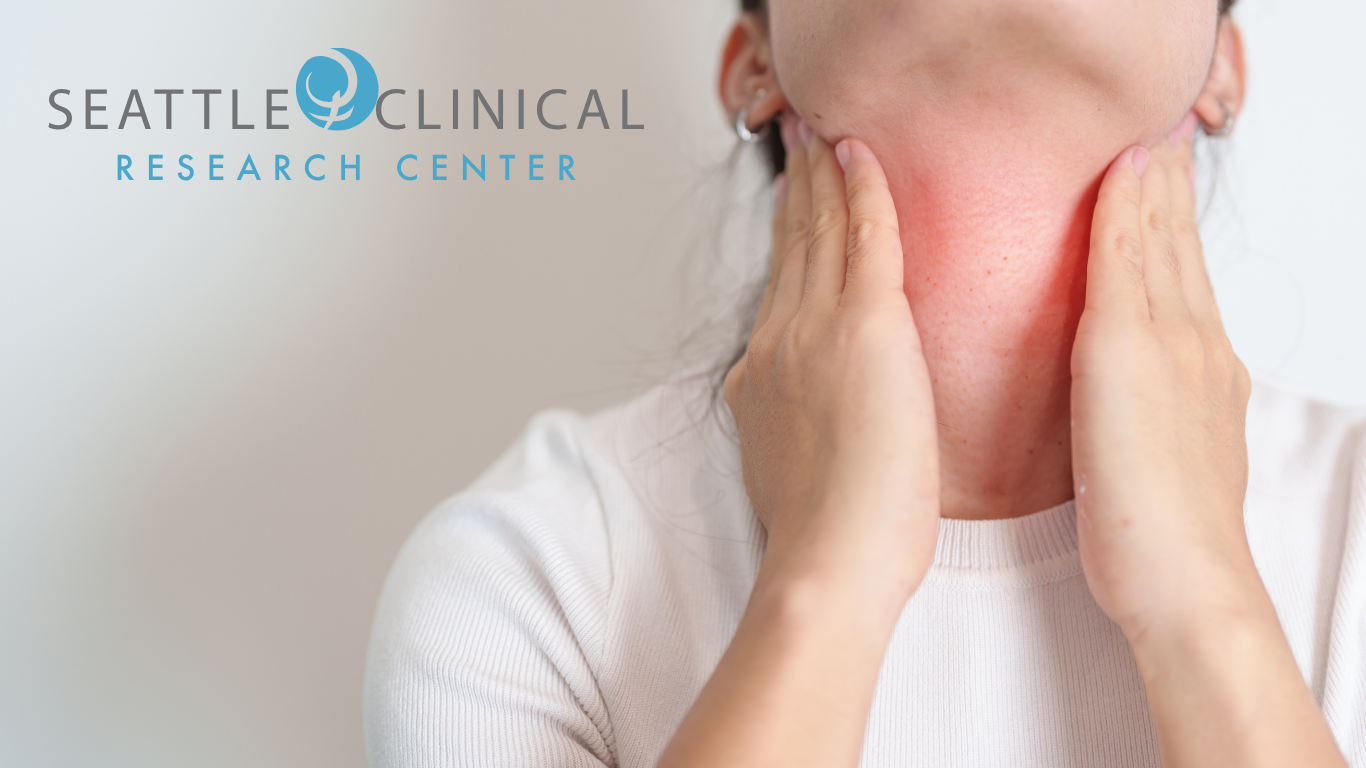
Graves’ Disease is an autoimmune disorder that creates generalized overactivity of the entire thyroid gland, a condition called hyperthyroidism. The disease is the most common cause of hyperthyroidism in the United States, and it is named after Robert Graves, an Irish physician, who first described this form of hyperthyroidism about 150 years ago. The disease is significantly more common among women than among men, occurring between 7 and 8 times as often in people born genetically female.
The condition occurs when something genetic or environmental triggers your immune system to overproduce an antibody called thyroid-stimulating immunoglobulin (TSI). TSI attaches to healthy thyroid cells, causing your thyroid to overproduce thyroid hormones. In one notable study of the disease, researchers estimated that genes are responsible for 79% of an individual’s risk of developing Graves’ Disease, with the remaining percentage of risk attributable to environmental factors. These environmental factors include stress, pregnancy, vitamin D deficiencies, and use of nicotine products.
The impact of this disease can cause problems with the function of your heart and the structural integrity of your bones, and it is important to immediately seek treatment if you display symptoms, which can include the following:
· Heat intolerance and excessive sweating
· Rapid heartbeat (tachycardia)
· Shortness of breath (dyspnea)
· Tremor (shakiness)
· Anxiety or nervousness
· Diarrhea and/or frequent bowel movements
· Enlarged thyroid gland (goiter)
· Hair loss
· Insomnia
· Light menstrual bleeding or fewer or absent periods
· Significant weight loss
More than 1 in 3 people with Graves’ Disease will develop an eye condition called Graves’ ophthalmopathy, which results from your immune system attacking the muscles and other tissues around your eyes. Symptoms of this complication of Graves’ Disease can include enlarged, irritated, or puffy eyes, light sensitivity, eye pressure or pain, and blurred or double vision.
Graves’ Disease is generally diagnosed on a preliminary basis via findings during a physical exam, and a diagnosis is confirmed by laboratory tests that measure the level of thyroid hormones (thyroxine, or T4, and triiodothyronine, or T3) and thyroid-stimulating hormone (TSH) in your blood. If these laboratory tests are inconclusive, a radioactive iodine uptake test (RAIU) can be conducted to confirm a diagnosis.
Individuals with Graves’ Disease are customarily treated with beta-blocker medications as an initial intervention. Medications do not cure Graves’ Disease, but when given in adequate doses are effective in controlling the condition.
Clinical trial research is critically important in the ongoing efforts to advancing scientific and medical research. If you are interested in becoming a clinical trial participant, visit the following website: Finding a Clinical Trial | National Institutes of Health (NIH). The website provides resources for individuals looking for clinical trials, and includes a link to www.clinicaltrials.gov, which offers the opportunity to search for clinical trials by criteria including specific medical condition, type of treatment, and geographical location.
Seattle Clinical Research Center also has local clinical trials for Graves’ Disease. Check our website regularly for more information or fill out a form to be notified for future studies.

Why Participation Matters
By taking part in HSV-2 research, you are helping medical experts explore new treatments, understand the virus better, and pave the way for future breakthroughs. Participation not only supports medical progress but also helps improve the options available to people living with HSV-2 around the world.
At Seattle Clinical Research Center, we are dedicated to advancing care for HSV-2 and other conditions through clinical research. Learn more about current studies and how you can play a role in helping shape the future of treatment.